kasagutan sa mga bumabagabag sa iyong isipan - sana
makatulong
ito...
Tama ka sa iyong paglapit sa akin ukol sa iyong mga
katanungan....dapatwat
hindi
ako nakakasiguro sa lahat ng aking sagot, susubukan kong bigyang
liwanag ang
lahat ng iyong katanungan...
Ang aking kaibigan ay mayroon lang mga ilang katanungan na matagal
nang
bumabagabag sa kanyang araw-araw na pamumuhay. maaaring ang iba rito
ay alam
na
rin ito ngunit walang makapagbigay ng akmang kasagutan o
pagpapaliwanag.
ito ay
ang mga sumusunod:
1. ang squidballs ba ay bayag ng pusit?
>>Ang squidballs ay hindi bayag ng pusit ngunit bayag ni Tiya Pusit.
2. pwede bang uminom ng softdrink kapag coffee break?
>>Pwedeng uminom ng softdrink kung coffebreak ngunit kailangan itong
lagyan ng asukal at kopimeyt. kopimeyt dapat at huwag gatas. (milk
in
my cereal, kopimeyt in my pepsi. sounds good to me!)
! 3. pwede bang gamitin ang a.m. radio pag gabi na?
>>Maari lamang gamitin ang a.m. radio kapag gabi kung ang iyong
pakikinggan ay f.m.
4. ang fire exit ba ay labasan ng apoy?
>>Ang fire exit ay ginagamit lamang bilang labasan ng apoy kapag may
sunog. Ito ang kanilang daan upang sila'y makatakas o ang tinatawag
na "fire escape".
5. ang uod ba pag namatay ay inuuod din?
>>Ang tao kapag namatay ay hindi tinatao. Malamang ang uod ay hindi
rin
inuuod. Kung ang tao ay inuuod kapag nalaguatan ng hininga, siguro
ang
uod kapag namatay ay tinatao.
6. totoo bang ang mga manok na pinatay sa jolibee ay masasaya kaya
sila
tinawag na chicken joy?
>>Ang mga manok na pinatay sa Jolibee ay masaya kung kaya't sila'y
tinawag na chicken joy. Ngunit hindi kinakailangang sa jolibee
patayin
ang manok upang maging ito ay maging masaya...ang mga manok ay
nagiging masaya kapag sila ay may kasama sa b! uhay. Kapag ito ay
nag-iisa lamang, ito ay hindi chicken joy kundi...mcchicken singles.
(Ang pinakamasayang manok sa lahat ay iyong 6-pc. chicken mcnuggets
o
tinatawag na "orgy" sa inggles)
7. mayroon bang kahit isang langgam na mahilig sa maalat?
>>Alam na ba ninyo iyong patawa na "itlog maalat"? Nakagat ako
minsan ng langgam.......
8. kung ang 7-11 store ay bukas 24 hrs a day , 7 days a week , at
365 days
a year. bakit may lock pa ang pinto nila? bakit ? bakit?
>>Dalawa ang dahilan. Una, may coffee break (tingnan ang katanungan
bilang 2 hinggil sa maaaring inumin kapag coffe break) din naman ang
mga nagtatrabaho sa 7-11. Pangalawa, mayroon tayong tinatawag na
leap
year.
9. bakit di mataas ang highway?
>>Dahil kung mataas ang hiway, walang paglalagyan ng skyway.
10. ba't alang lumilipad na sasakyan sa flyover?
>>Hindi lang natin nakikita ang mga nagliliparang sasakyan sapag!
kat
hindi tayo tumitingala kapag tayo ay nasa flyover. Ang pagsalin ng
dayuhang salita na flyover sa katutubong wika ay "fly"-lipad,
"over"-
sa ibabaw. Ibig sabihin nito na ang mga kotse ay hindi lumilipad sa
flyover ngunit sa ibabaw ng flyover. Ngayon kung titingala ka naman
kapag ikaw ay nasa flyover ang tangi mong makikita ay ang kisame ng
iyong sasakyan. Alam kong wala sa inyong mayroong sasakyan na Miata,
Boxster, Kompressor, Z3, Z8 at kung ano-ano pang kotseng pangmayaman
kaya't huwag na kayong magpumilit mamilosopo...ako lang ang may
karapatan. Kung idadahilan niyo naman na mayroon kayong sunroof,
hanapin ninyo ang inyong tinatawag na "sense of humor". namamatay ng
maaga ang palaging seryoso.
sana ay nasagot ko ang iyong mga tanong at kung mayroon pang ibang
bagay na
bumabagabag sa iyong isipan huwag kang mag-alinlangang magpadala sa
akin
ng e-mail. at lagi rin natin sana tandaan ang dayuhang salawi! kain
na "ask a
dumb question and you'll get a dumb answer."
Monday, November 12, 2012


Friday, November 2, 2012
Seafafers' rights: Dismissal and Due process
(Know your Rights Under the POEA Standard Employment Contract)
HOW does due process apply to the employment relationship of Filipino seafarers with their employers?
The POEA Standard Employment Contract and Implementing Rules of Book V of the Labor Code prescribe the standards of due process that must be substantially observed in cases of termination of employment on just causes, i.e., the serving of the first written notice on the employee, which states the ground(s) for termination and which gives the employee the opportunity to explain, the holding of a hearing where the employee may present his evidence, and the serving of the notice of termination, indicating the grounds established to justify the dismissal.
In the case of Philippine Transmarine Carriers, Inc. vs. Felicisimo Carilla (G.R. No. 157975, June 26, 2007), the seafarer filed a complaint for illegal dismissal after he was summarily repatriated to the Philippines while the vessel he embarked on was in India. His employer presented mere unauthenticated and unsigned papers and reports to enumerate his alleged acts of incompetence. The Supreme Court found that the said documents have no probative value and that the seafarer was dismissed without due process hence, his claim for the unexpired portion of his contract partially granted.
In the case of Joel B. de Jesus vs. NLRC (G.R. No. 151158, Aug. 17, 2007), just barely 3 months from the day he departed from the Philippines and embarked on his vessel, the seafarer was repatriated after he was diagnosed to be suffering from gastric ulcer. After his request for financial assistance and medical treatment was disallowed, he filed a claim for payment of his unpaid salary, sickness allowance, and reimbursement of medical expenses against his employer before the National Labor Relations Commission on the ground that he was illegally discharged.
The Court observed that since the employer did not present proof that: (a) the seafarer breached his employment contract and (b) that the prescribed disciplinary procedures on notice and hearing provided under Section 17 of the POEA SEC were followed, the employer failed to establish its defense of the seafarer’s valid dismissal. As such, the seafarer’s claims for payment were accordingly granted.
Thursday, October 18, 2012
San Pedro Calungsod, Pinoy Seafarers, and the path to sainthood.

The Filipino seafarers are not only major contributors to
the country’s economic growth, they are also ‘saint potentials’, thus
said Manila Archbishop Luis Antonio Tagle during the 17th National
Seafarers' Day (NSD) last September 30, 2012 .
The archbishop was referring to Saint Lorenzo Ruiz and Blessed Pedro Calungsod, the soon-to-be second Filipino saint as he noted that these Philippine Catholic Church’s two martyrs were seafarers and missionaries at the same time before they became saints. He added that Ruiz and Calungsod sailed to other countries and died for a mission: “to teach the Good News.”
“You should be instruments for what is good work and not of temptations,” he added. “The Filipinos today are sailing everywhere. Bring with you the best of the Filipinos.”
President Benigno Aquino III approved Proclamation 481 declaring October
21 as the national day of celebration on the canonization
of Blessed Pedro Calungsod to honor his “life and martyrdom”. “The life and martyrdom of Blessed
Calungsod shall serve as an inspiration to Filipinos, particularly the youth to
live a life anchored on values and principles,” part of the proclamation reads.
Calungsod was a teenage catechist from Visayas who accompanied Blessed Diego Luis de San Vitores in Tumhon village in Guan, Marianas, where they were killed on April 2, 1672. Blessed Pope John Paul II beatified him in March 2000.
Calungsod was a teenage catechist from Visayas who accompanied Blessed Diego Luis de San Vitores in Tumhon village in Guan, Marianas, where they were killed on April 2, 1672. Blessed Pope John Paul II beatified him in March 2000.
The Philippines is considered as the
major supplier of maritime labor globally. Philippine Overseas Employment
Administration (POEA) data showed that the deployed Filipino seafarers in 2006
(274,497), 2007 (266,553), 2008 (261,614), 2009 (330,424), 2010
(347,150), and 2011 (400,000) brought in the dollar
remittances that have also been constantly increasing from US$1.9B in
2006, US$2.2B in 2007 , US$3B in 2008, US$3.4B in 2009, US$3.8B in 2010 to
S$4.3B in 2011. On the other hand, the Philippines as a flag State has a
registered fleet comprising around 1.4% of total world tonnage.
Given the vast Philippine coast line
(twice the size of the United States and nearly three times more than China),
Filipinos have natural maritime instincts that place them at an advantage over
other nationalities. Foreign shipowners are known to prefer Filipino seafarers
for equally important qualities: dedication and discipline, industry,
flexibility, loyalty, English language fluency, adaptability, positive work
attitude, law-abiding, and problem-solving capability.
Monday, September 24, 2012
National Seafarers' Day 2012


The archbishop was referring to Saint Lorenzo Ruiz and Blessed Pedro Calungsod, the soon-to-be second Filipino saint as he noted that these Philippine Catholic Church’s two martyrs were seafarers and missionaries at the same time before they became saints. He added that Ruiz and Calungsod sailed to other countries and died for a mission: “to teach the Good News.”
“You should be instruments for what is good work and not of temptations,” he added. “The Filipinos today are sailing everywhere. Bring with you the best of the Filipinos.”
The Philippines is celebrating this week NSD carrying the theme "MARINONG PILIPINO: DAKILA PA RIN ANG KAGITINGAN; One hundred years after the Titanic”. One of the consequences of the sinking, in 1912, of the Titanic, in which 1,503 people lost their lives, was the adoption, two years later, of the first International Convention for the Safety of Life at Sea (the SOLAS Convention). The convention is still in force today, amended and updated many times.
The NSD theme was patterned after the 2012 Maritime Week theme selected by the of International Maritime Organization (IMO) to pay tribute to all those who, in the course of the 100 years, have contributed to improvements in maritime safety. The celebration also aimed to examine whether the lessons drawn from amongst the most costly (in human lives lost) accidents of the last 100 years have been learnt to the full.
Under Proclamation No.1049 issued in
1997 by then president Fidel V. Ramos, the Apostleship of the Sea (AOS)
was tasked to coordinate with the public and private sector in
activities related to the National Seafarers’ Day during the last
Sunday of September every year. The purpose of the Proclamation is to give due recognition to the vital
role of Filipino seafarers towards the development of the Philippines
as a maritime country. The International Maritime Organization (IMO) on
the other hand, in its Circular No. 1884 dated July 11, 1996, requested
all member nations to “celebrate’ World Maritime Day (WMD)during the
last week of every September (maritime week) of each year.
Consequently, Presidential Proclamation No. 866 dated Sept. 6, 1996
declared Sept. 27, 1996 and the last Friday of September every year, as
National Maritime Day (NMD)
spearheaded alternatively by the government agencies , to wit Maritime
Industry Authority (MARINA), Philippine Coast Guard (PCG), and
Philippine Ports Authority (PPA).


Given
the vast Philippine coast line (twice the size of the United States
and nearly three times more than China), Filipinos have natural
maritime instincts that place them at an advantage over other
nationalities. Foreign shipowners are known to prefer Filipino seafarers
for equally important qualities: dedication and discipline, industry,
flexibility, loyalty, English language fluency, adaptability,
positive work attitude, law-abiding, and problem-solving capability.

Ironically, the Philippines almost lost its slot on the historical first thirty ratifying countries of the Maritime Labour Convention of 2006 (MLC2006 It took the philippines six years to ratify MLC2006 on August 13, 2012 after it became a signatory of the so called international magna carta for seafarers rights..The convention sets out minimum standards and fair working conditions for seafarers worldwide. Philippines is the thirtieth country to ratify MLC 2006 out of the 314 signatories and one of the of the first thirty ratifying countries required for the convention to take effect.
Activities nationwide include the Memorial at Sea, High Mass, Grand Parade, Oratorical/ Art/ Photo Contest, Karaoke challenge, and the Search for Top Ten Outstanding Maritime Students. The Grand Parade from LUSWELF Kalaw to the Philippine Port Authority (PPA) gym was participated in by more than 4000 stakeholders from maritime schools, government agencies, manning agencies, training centers, maritime organizations, unions, families and private institutions.
See me at 2:30 of this Balitanghali coverage by GMA of the Mass during the offertory in front of VP Binay.
Congratulations
to the Top Ten Maritime Students of the Philippines during this year's
National Seafarers' Day celebration. I was one of the judges who
interviewed the short-listed 34 students from the original 70 plus
hopefuls nationwide. After the 10-hour interview with each student
giving their best within 15 minutes each, these top ten students were
chosen. Some of the questions we asked them: a) if your boat had an accident and only two are left (you and one of
the other hopefuls) will you give him the remaining salbabida? (b) how
will you deal with discrimination on board? (c) due to high income,
will the "expected compulsory" monetary support to family members
cultivate a culture of mendicancy (d) the "utility boy" phenomenom; and
(d) sell yourself to a manning agency as a promising future Filipino
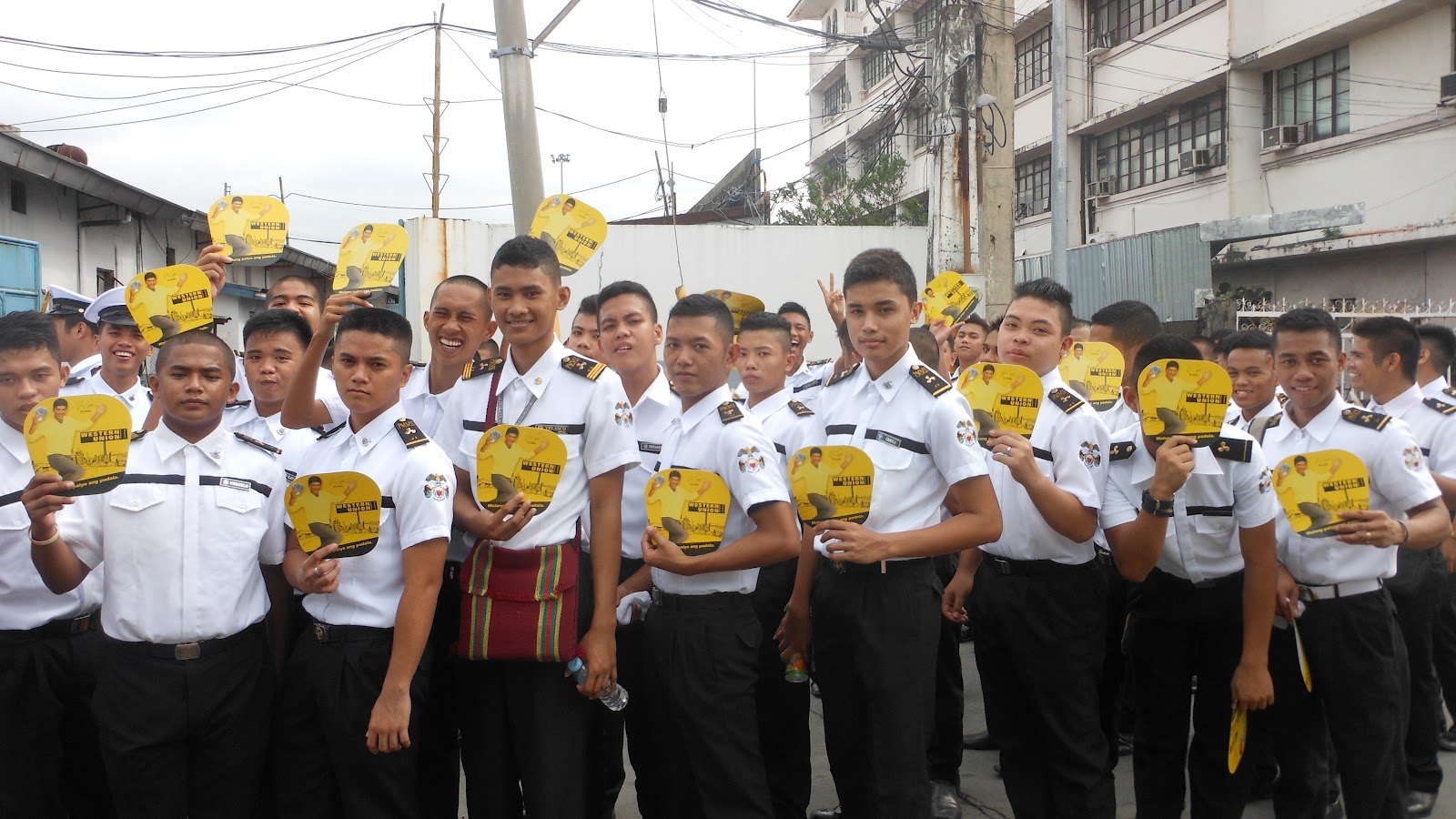
seafarer. The search was sponsored by Western Union.
 |
| Top Ten Maritime Students of the Philippines |
 |
| Four of the Top Ten Maritime Students of the Philippines during this year's National Seafarers' Day celebration being interviewed live over our radio program Bantay OCW Kabalikat ng Marino last September 27, 2012 . It is aired every thursday. 1230:00 p.m. to 2:00pm Radio Inquirer DZIQ 990AM. Then at 8:00p.m. Friday NBN channel4 |




Wednesday, September 19, 2012
Gorecho- Pizzaras-
Benegilda Gorecho + Victor Pizarras
A. Agapito Pizarras + Josefina Kilayko
i: Cerina Pizarras + Leonardo Legaspi
a. Jocelyn Legaspi
ii. Alberto Pizarras + Lolita
a. Junjun
b. Arlyn
iii.Araceli Pizarras + Romeo Herrera
a.Richard
b.Laiza
c. Jimmyton
d. Melanie
e. Roman
B.Marcelo Pizarras + Candelaria
i. . Leonarda
C. Maximino Pizarras + Pilar Lagora
i. Soledad
ii. Rustica Pizarras + Alfredo Alcantara
a. Rolando
b. Reynald
c. Benjie
iii. Nenita
Maximino Pizarras + Juliana Lansaderas (second marriage)
i. Eduardo Pizarras + Marilou
ii. Antonio
iii. Romeo
D.Marciana Pizarras + Daniel Valentos
i.Felipe
ii. Beatriz
iii. Teresita
E.Simplicio Pizarras + Sulipicia Dumagan
i. Edgar Pizarras + Nona Luz Brillantes
a. Sara Jessica
b. Edna Lyn Pizzaras + Patch Mulchand
(Leila Angela)
ii. Ramon Pizarras + Rosalita _____
a. Ritchel Rpy Pizarras + Luchi _______
b. Rosalie Pizarras + Gilbert ____
c. Richwell Pizarras + Aileen ______
(Ramon Victor)
iii. Lilibeth Pizarras + Bobby Echeviria
a. Bridgith
b. Britney
iv. Cely Pizarras + Lito Samar
a. Karl Ian
G. Alejandra Pizarras + Tirso Sagaral
i. Renato
ii. Remedios
iii. Ernesto Sagaral + Dona _____
a. Carla Joy
b. Mico
Tuesday, September 18, 2012
CYBERCRIME PREVENTION ACT OF 2012: A Restrictive Mindset

The successful passage through the legislative mill and their immediate signing into law by President Benigno S. Aquino III of bills affecting the media and their fundamental task of gathering and disseminating information, among them the Data Privacy Act (Republic Act 10173) last August, and the Cybercrime Prevention Act (RA 10175) this September, suggests how restrictive rather than expansive is the mindset of the country’s legislators, and of Mr. Aquino himself when it comes to enshrining in the law those principles—accountability and transparency, press freedom and free expression, etc.—to which he has repeatedly declared he is committed.
RA 10173 and 10175 breezed through both houses of Congress within months after they had been introduced in 2011, and apparently were in no danger of being vetoed once they reached Mr. Aquino’s desk.
The Data Privacy Act, among other provisions, penalizes those in government who release information of a personal nature, which seems a reasonable enough restriction in behalf of the right to privacy—until one recalls that information on the personal lives of government officials often has a bearing on their performance as public servants accountable to the citizenry, and is therefore among the legitimate concerns of the news media.
The Cybercrime Prevention Act, meanwhile, incorporates the 82-year old libel law in the Revised Penal Code (RPC) in including libel among the crimes that may be committed through the use of computers. Under the provisions of the RPC on libel, the penalty for violators is imprisonment of six months for every count of libel committed. Libel as a criminal offense has been used by past administrations as well as local officials today to harass and intimidate journalists. The outstanding example of its use against journalists was the filing by Jose Miguel “Mike” Arroyo of 11 libel suits against 46 journalists during the disputed presidency of his wife Gloria Macapagal Arroyo. And yet Congress has through the decades ignored the demand from journalists and human rights groups for the decriminalization of libel.
Compare the speed with which RA 10173 and RA 10175 were passed—in both instances with only perfunctory public hearings—with the difficulties Congress is having with passing a Freedom of Information Act (FOI), and with Mr. Aquino’s by now obvious aversion to it.
And yet certain honorable members of Congress have not been miserly with their lip service to the alleged need for an FOI. As for Mr. Aquino, since he became President he has stopped talking about the need for one, after pledging during the 2010 campaign for the Presidency that he was all for it in behalf of transparency and as a means of insuring government accountability. The bottom line, apparently, is that neither Congress nor Mr. Aquino want an FOI act passed, period.
The passage of the Cybercrime Prevention Act also suggests among other possibilities that both Congress and Mr. Aquino have chosen to ignore the 2011 declaration of the United Nations Human Rights Committee (UNHRC) that the Philippine libel law is excessive because it penalizes violators with imprisonment, contrary to the human rights protocols to which the Philippines is a signatory, and therefore must at least be reviewed towards decriminalizing libel. Either that, or the authors of the bills, and Mr. Aquino himself, are unfamiliar with both the UNHRC declaration, as well as with the long-standing demand to decriminalize libel in order to put an end to the use of the libel law to intimidate and silence journalists. Apparently there is little hope that libel will ever be decriminalized, RA 10175 having in effect further strengthened it by widening its application.
Finally, a word of caution. RA 10175 is the first law affecting communication through cyberspace that has been passed in this country since the eCommerce Act of 2000. Prior to its passage, the Philippines had been distinguished among its Asian neighbors for the absence of regulatory legislation affecting the Internet. It can signal the opening of the floodgates of Internet regulation that will affect Filipino netizens, given the restrictive mindset of the country’s leaders. It is a distinct possibility to which journalists and bloggers, ordinary citizen and anyone committed to free expression through whatever medium, should be alert, and must be prepared to combat.
Thursday, September 13, 2012
Lotto's mandatory contributions

The PCSO is mandated by virtue of a special law to contribute funds for the following government entities: the Philippine Sports Commission, the Commission on Higher Education, the Comprehensive and Integrated Shelter and Urban Development Financing Program, the Philippine Centennial Commission, the National Commission on Indigenous People, the Overseas Workers Welfare Administration, the Department of Foreign Affairs and the Quirino Memorial Medical Center.
The PCSO allocates to local government units a five percent (5%) share from the total sales of on-line lottery (lotto) outlets operating within their jurisdictions, including a documentary stamp tax from the said donation.
- RA#6847 – Six (6) Sweepstakes Draws as contribution to the Philippine Sports Commission Program
- RA#7722 – 1% of lotto gross sales to the Commission on Higher Education
- RA#7660 – Documentary Stamp Tax – 10% of the gross sales
- RA#7835 – 10% of Charity Fund to the Comprehensive and Integrated Shelter and Urban Development Financing Program (National Shelter Program)
- RA#8042 – Sec.20 and 77 of the Omnibus Rules provides for the appropriation of Php10 million for the Shared Government Information System on Migration (SGISM) under the Department of Foreign Affairs
- RA#8042 – Article IX Section 37 known as the Migrant Workers Act of 1995 – Php 150 million shall be funded from the proceeds of lotto draws taken from the Charity Fund for the Congressional Migrant Workers Scholarship Fund
- RA#8175 – 10% of net income for the Crop Insurance Program
- RA#8313 – Php100 million from lotto agents for the upgrading of the Quirino Memorial Medial Center
- RA#8371 – Php 50 million contribution to the National Commission on Indegenous Peoples for the Ancestral Domain Find
- RA#8492 – Php 250 million from the annual net earnings from lotto for the Museum Endowment Fund
- RA#9165 – 10% share on forfeited rpizes as special account in the general fund of Dangerous Drugs Board
- E.O.#201 – Php 1 billion Standby Fund for the financial requirement for Severe Acute Respiratory Syndrome (SARS) awareness and health promotion campaign
- E.O.#218 – Php 1 billion Standy Fund for the operations and programs of the Philippine Drug Enforcement Agency
- E.O.#280 – Php 250 million standy Fund for the financial requirements of the Avian Influenza or Bird Flu Viruses
- E.O.#357 – 5% Lotto share of local government units from the Charity Fund
Sunday, August 26, 2012
Neil Armstrong, the moon and Miss Universe

NEIL Armstrong, who led the Apollo 11 spacecraft and became the first man to set foot on the moon, has died from complications after heart surgery.
The day man landed on the moon, Miss Gloria Diaz of the Philippines won the Miss Universe title. In July 1969, Armstrong commanded the Apollo team, which included Aldrin and pilot Michael Collins, that went to the moon. Armstrong and Aldrin descended to the lunar surface, landing in the dry Sea of Tranquility. Their lunar module touched down with about 30 seconds of fuel remaining. Armstrong radioed their safe arrival back to NASA. "Houston, Tranquility Base here — the Eagle has landed," he said. Seven hours later, he stepped out of the spacecraft and down onto the moon itself, speaking his historic words.
When Gloria Diaz was asked " If the man on the moon should come down to Earth and visit your hometown, what would you do to entertain him?, " the 18-year-old petite Bb. Pilipinas-Universe answered, “Why, I guess I would do for him what I always do. Since he has been away on the moon for so long, he would want a change.”
That, among other winning qualities, helped Gloria Diaz clinch for the Philippines its first ever Miss Universe crown (followed four years later, in 1973, by Margie Moran in Greece). Soon after, US Pres. Richard Nixon came for a visit and he mentioned in his speech, “Americawas conquered the moon but the Philippines conquered the universe.”
Sunday, August 19, 2012
Philippines ratifies Maritime Labour Convention 2006


With the ratification by the Philippines of the MLC 2006 by Philippines last August 13, 2012 , 30 member States of the International Labour Organization (ILO) have now ratified this important Convention, which sets out minimum standards and fair working conditions for seafarers worldwide. While the first requirement for entry into force of the Convention – coverage of 33 per cent of the world gross tonnage – has already been attained, the ratification by Philippines is an important step towards achieving the second requirement: 30 ratifying countries. The MLC,2006 will soon enter into force in 2012.

The convention was already ratified by 30 countries/ states, to wit: Liberia (June 7,2006), Marshall Islands (September 25, 2007 ), Bahamas (February 11,2008), Panama (February 6, 2009), Norway (February 10, 2009) , Bosnia and Herzegovina (January 18, 2010) , Spain (February 4, 2010), Croatia (February 12, 2010) , Bulgaria (April 12, 2010) , Canada (June 15, 2010),Saint Vincent and the Grenadines (November 9, 2010) , Switzerland (February 2, 2011), Gabon (May 12, 2011) Benin (June 13, 2011), and Singapore ( June 15, 2011). Denmark (June 23, 2011) Latvia (August 12, 2011)_ Antigua and Barbuda (August 11, 2011) , the Government of Luxembourg (19 September 2011), Kiribati (24 October 2011) Netherlands (December 2011) Australia (14 December 2011), Tuvalu (February 16, 2012) Saint Kiss and Nevis (February 21, 2012), Togo (March 14, 2012) Poland (May 3, 2012), Palau (May 29, 2012), Sweden (June 12, 2012) Cyprus (July 20, 2012) and Philippines.

Ratification is the formal act by which a state confirms and accepts the provisions of the convention concluded by its representatives. The purpose of ratification is to enable the contracting states to examine the convention more closely and to give them an opportunity to refuse to be bound by it should they find it inimical to their interests. It is for this reason that most treaties/conventions are made subject to the scrutiny and consent of a department of the government other than that which negotiated them. Ratification is generally held to be an executive act, undertaken by the head of the state or of the government, as the case may be, through which the formal acceptance of the treaty is proclaimed.
In the Philippine jurisdiction, the power to ratify is vested in the President and not, as commonly believed, in the legislature. The role of the Senate is limited only to giving or withholding its consent, or concurrence, to the ratification. The MLC 2006 will become valid and effective if concurred in by two-thirds of all the members of the Senate (Section 21, Article VII, 1987 Constitution.) This means it forms part of Philippine law by virtue of transformation. By an act of the legislature, the convention rules may be transformed into Philippine law, to be applied or enforced as part of Philippine law.

The MLC 2006 is an important new Convention that was adopted by the International Labour Conference of the ILO at a maritime session in February 2006 in Geneva, Switzerland. It sets out seafarers’ rights to decent conditions of work and helps to create conditions of fair competition for shipowners. It is intended to be globally applicable, easily understandable, readily updatable and uniformly enforced. The MLC , 2006 has been designed to become a global legal instrument that, once it enters into force, will be the “fourth pillar” of the international regulatory regime for quality shipping, complementing the key Conventions of the International Maritime Organization (IMO) such as the International Convention for the Safety of Life at Sea, 1974, as amended (SOLAS), the International Convention on Standards of Training, Certification and Watchkeeping, 1978, as amended (STCW) and the International Convention for the Prevention of Pollution from Ships, 73/78 (MARPOL). Between 1920 and 1996, a total of 39 Conventions, 29 Recommendations and one Protocol concerning seafarers have been adopted by the ILO.

The MLC contains a comprehensive set of global standards, based on those that are already found in 68 maritime labor instruments. It modernizes the global standards to: (a) set minimum requirements for seafarers to work on a ship; (b) address conditions of employment, accommodation, recreational facilities, food and catering, health protection, medical care, welfare and social security protection; (c) promote compliance by operators and owners of ships by giving governments sufficient flexibility to implement its requirements in a manner best adapted to their individual laws and practices; and (d) strengthen enforcement mechanisms at all levels, including provisions for complaint procedures available to seafarers, shipowners’ supervision of conditions on their ships, the flag States’ jurisdiction and control over their ships, and port State inspections of foreign ships.
The new Convention was perceied to achieve the aim of near universal ratification because the Convention was adopted by a record vote of 314 in favour and none against (two countries abstained for reasons unrelated to the substance of the Convention), after nearly two weeks of detailed review by over 1,000 participants drawn from 106 countries.

Countries that ratify the Convention will require ship owners to put the standards in place before allowing seafarers aboard. And ratifying countries will have the right to inspect vessels for compliance before port calls are allowed. The Convention gives these countries the right to deny ships that are not compliant from sailing onwards. This applies to ships regardless whether the countries they are registered in have ratified the Convention or not.
The Philippines will definitely be one of the major beneficiaries of this convention. The Philippines is considered as the major supplier of maritime labor globally. Philippine Overseas Employment Administration (POEA) data showed that the deployed Filipino seafarers in 2006 (274,497), 2007 (266,553), 2008 (261,614), 2009 (330,424), 2010 (347,150), 2011 (400,000) brought in the dollar remittances that have also been constantly increasing from US$1.9B in 2006, US$2.2B in 2007 , US$3B in 2008, US$3.4B in 2009, US$3.8B in 2010 to S$4.3B in 2011. On the other hand, the Philippines as a flag State has a registered fleet comprising around 1.4% of total world tonnage.
Given the vast Philippine coast line (twice the size of the United States and nearly three times more than China), Filipinos have natural maritime instincts that place them at an advantage over other nationalities. Foreign shipowners are known to prefer Filipino seafarers for equally important qualities: dedication and discipline, industry, flexibility, loyalty, English language fluency, adaptability, positive work attitude, law-abiding, and problem-solving capability.
The Philippines can benefit from ratifying the Convention as a labour supplying state, flag or port state. The maritime labour convention is a good reference point for the Philippine’s formulation of laws and policies responsive to the conditions and contexts of seafarers. Ratification can serve as basis for technical assistance.
As the foremost seafarer-supplying country and a flag State with a registered fleet comprising around 1.4% of total world tonnage, it behooves upon Philippine social partners and stakeholders to determine the passage most beneficial to our national interests. The Philippine government properly ratified MLC2006 in order that it will be one of the thirty ratifying countries required for the convention to take effect
Subscribe to:
Posts (Atom)