Showing posts with label filipino seafarers. Show all posts

Wednesday, October 1, 2014

19th National Seafarer's Day: “Marinong Pilipino: Haligi ng Pagbabago


Filipino seafarers are the living saints – they travel the high seas with a vocation and
purpose. These were the words of Cubao Bishop Honesto Ongtioko during the high mass last Sunday, September 28, 2014,   at the Ninoy Aquino Stadium  in celebration of the  19th National Seafarer's Day. This year’s theme is “Marinong Pilipino: Haligi ng Pagbabago”.

Bishop Ongtioko compared Filipino Seafarers to two Filipino saints – San Lorenzo Ruiz and San Pedro Calungsod. With faith as a weapon, the saints and the Filipino seafarers  sailed with a mission – to be the soldier of change not only in the Philippines but also to the whole world.

“Treasure your faith wherever you are. Translate your faith into actions – be the pillars of love of god,” he said. “Kung walang haligi, babagsak ang bahay. Marami mamamatay. Bawat isa ay may mission sa pagbuo ng matibay  na simbahan.”

Seafarers and their families  participated in the nationwide activities for the 18th National Seafarer's which included the Memorial at Sea, High Mass, Grand Parade, Oratorical/ Art/ Photo Contest, Karaoke challenge, 

The Grand Parade from Rajah Sulayman park in Malate to Ninoy Aquino Stadium  was participated in by more than 4000 stakeholders from maritime schools, government agencies, manning agencies, training centers, maritime organizations, unions, families and private institutions.

The high mass was celebrated by  Cubao Bishop Honesto Ongsioko while Vice-President Jejomar Binay was the keynote speaker.

 Another highlight is the awarding of the winners in the different NSD contest   including the Ten Outstanding Maritime Students of the Philippines (TOMSP): Elijah Jose C. Barrios (John B. Lacson Foundation Maritime University (Arevalo) Inc.) Boy George R. Benavente, John B.Lacson Colleges Foundation-Bacolod Inc; Niño C. Copones ( Mariner's Polytechnic Colleges Foundation-Canaman Campus); Shiela May M. Diaz  (Maritime Academy of Asia and the Pacific CGSO Campus);  Emmanuel D. Dotillos Jr. (University of Cebu LapuLapu and Mandaue); Christian John B. Fajarito ( Manuel S. Enverga University Foundation Inc.); Frank Stevens O. Mendoza (Asian Institute of Maritime Studies); Roger Roland S. Roullo (Philippine Merchant Marine Academy);  Joseph Ryan S. Sanchez (DMMA College of Southern Philippines); and John Lawrence G. Tabanao (Maritime Academy of Asia and the Pacific CGSO Campus)
. 


Former president Fidel V. Ramos earlier issued on July 9, 1996 Proclamation No. 828 declaring August 18 as National Seafarers' Day (NSD) wherein  the Apostleship of the Sea (AOS) was tasked to coordinate with the public and private sector in   activities related to the celebration of said event. The purpose of the Proclamation is to give due recognition to the vital role of Filipino seafarers towards the development of the Philippines as a maritime country. Later,  Proclamation No.1094 was issued in 1997 by President Ramos which moved NSD    during the last Sunday of September every year. The International Maritime Organization (IMO) on the other hand, in its Circular No. 1884 dated July 11, 1996, requested all member nations to “celebrate’ World Maritime Day (WMD )during the last week of every September (maritime week) of each year. Consequently, Presidential Proclamation No. 866 dated Sept. 6, 1996 declared Sept. 27, 1996 and the last Friday of September every year, as National Maritime Day (NMD) spearheaded alternatively by the government agencies , to wit Maritime Industry Authority (MARINA), Philippine Coast Guard (PCG), and  Philippine Ports Authority (PPA). 

                 
The Philippines is considered as the major supplier of maritime labor globally as there is an estimated one Filipino seafarer for every four complements  on board a vessel.  Per Philippine Overseas Employment Administration (POEA) data,. Philippine Overseas Employment Administration (POEA) data showed that there are 367,166  Filipino seafarers with POEA approved contract that were  deployed in 2013 who  brought in dollar remittances that reached US$5,215,378,000  . As of 2013, the seabased sector’s remittance comprise at least 22% of the total dollar remittances of OFWs. Remittances help spur domestic consumption in the Philippines and a key ingredient in the country’s drive to achieve higher but sustainable growth.

Given the vast Philippine coast line (twice the size of the United States and nearly three times more than China), Filipinos have natural maritime instincts that place them at an advantage over other nationalities. Foreign shipowners are known to prefer Filipino seafarers for equally important qualities: dedication and discipline, industry, flexibility, loyalty, English language fluency, adaptability, positive work attitude, law-abiding, and problem-solving capability.


Ironically, the Philippines almost lost its slot on the historical first thirty ratifying countries of the Maritime Labour Convention of 2006 (MLC2006).  It took the Philippines six years to ratify MLC2006 on August 13, 2012 after it became a signatory of the so called international magna carta for seafarers rights. The convention sets out minimum standards and fair working conditions for seafarers worldwide. Philippines is the thirtieth country to ratify MLC 2006 out of the 314 signatories and one of the first thirty ratifying countries required for the convention to take effect. 


Friday, November 2, 2012

Seafafers' rights: Dismissal and Due process


(Know your Rights Under the POEA Standard Employment Contract)

HOW does due process apply to the employment relationship of Filipino seafarers with their employers?
The POEA Standard Employment Contract and Implementing Rules of Book V of the Labor Code prescribe the standards of due process that must be substantially observed in cases of termination of employment on just causes, i.e., the serving of the first written notice on the employee, which states the ground(s) for termination and which gives the employee the opportunity to explain, the holding of a hearing where the employee may present his evidence, and the serving of the notice of termination, indicating the grounds established to justify the dismissal.

In the case of Philippine Transmarine Carriers, Inc. vs. Felicisimo Carilla (G.R. No. 157975, June 26, 2007), the seafarer filed a complaint for illegal dismissal after he was summarily repatriated to the Philippines while the vessel he embarked on was in India. His employer presented mere unauthenticated and unsigned papers and reports to enumerate his alleged acts of incompetence. The Supreme Court found that the said documents have no probative value and that the seafarer was dismissed without due process hence, his claim for the unexpired portion of his contract partially granted.
 
In the case of Joel B. de Jesus vs. NLRC (G.R. No. 151158, Aug. 17, 2007), just barely 3 months from the day he departed from the Philippines and embarked on his vessel, the seafarer was repatriated after he was diagnosed to be suffering from gastric ulcer. After his request for financial assistance and medical treatment was disallowed, he filed a claim for payment of his unpaid salary, sickness allowance, and reimbursement of medical expenses against his employer before the National Labor Relations Commission on the ground that he was illegally discharged.

The Court observed that since the employer did not present proof that: (a) the seafarer breached his employment contract and (b) that the prescribed disciplinary procedures on notice and hearing provided under Section 17 of the POEA SEC were followed, the employer failed to establish its defense of the seafarer’s valid dismissal. As such, the seafarer’s claims for payment were accordingly granted.

Thursday, October 18, 2012

San Pedro Calungsod, Pinoy Seafarers, and the path to sainthood.


The Filipino seafarers are not only major contributors to the country’s economic growth, they are also ‘saint potentials’, thus said  Manila Archbishop Luis Antonio Tagle during the 17th National Seafarers' Day (NSD) last  September 30, 2012 .   

 The archbishop was referring to Saint Lorenzo Ruiz and Blessed Pedro Calungsod, the soon-to-be second Filipino saint as he noted that  these Philippine Catholic Church’s two martyrs were seafarers and missionaries at the same time before they became saints. He added that Ruiz and Calungsod sailed to other countries and died for a mission: “to teach the Good News.”

 “You should be instruments for what is good work and not of temptations,” he added. “The Filipinos today are sailing everywhere. Bring with you the best of the Filipinos.”

President Benigno Aquino III  approved Proclamation 481 declaring October 21 as the   national day of celebration on the canonization of Blessed Pedro Calungsod to honor his “life and martyrdom”.  “The life and martyrdom of Blessed Calungsod shall serve as an inspiration to Filipinos, particularly the youth to live a life anchored on values and principles,” part of the proclamation reads.

Calungsod was a teenage catechist from Visayas who accompanied Blessed Diego Luis de San Vitores in Tumhon village in Guan, Marianas, where they were killed on April 2, 1672. Blessed Pope John Paul II beatified him in March 2000.

The Philippines is considered as the major supplier of maritime labor globally. Philippine Overseas Employment Administration (POEA) data showed that the deployed Filipino seafarers in 2006 (274,497), 2007 (266,553), 2008 (261,614), 2009 (330,424),  2010 (347,150),  and  2011 (400,000) brought in  the dollar remittances that have also  been constantly increasing from US$1.9B in 2006, US$2.2B in 2007 , US$3B in 2008, US$3.4B in 2009, US$3.8B in 2010 to S$4.3B in 2011. On the other hand, the Philippines as a flag State has a registered fleet comprising around 1.4% of total world tonnage.


Given the vast Philippine coast line (twice the size of the United States and nearly three times more than China), Filipinos have natural maritime instincts that place them at an advantage over other nationalities. Foreign shipowners are known to prefer Filipino seafarers for equally important qualities: dedication and discipline, industry, flexibility, loyalty, English language fluency, adaptability, positive work attitude, law-abiding, and problem-solving capability.

Monday, September 24, 2012

National Seafarers' Day 2012


The Filipino seafarers are not only major contributors to the country’s economic growth, they are also ‘saint potentials’, thus said  Manila Archbishop Luis Antonio Tagle during the 17th National Seafarers' Day (NSD) last  September 30, 2012 .  

 The archbishop was referring to Saint Lorenzo Ruiz and Blessed Pedro Calungsod, the soon-to-be second Filipino saint as he noted that  these Philippine Catholic Church’s two martyrs were seafarers and missionaries at the same time before they became saints. He added that Ruiz and Calungsod sailed to other countries and died for a mission: “to teach the Good News.”

 “You should be instruments for what is good work and not of temptations,” he added. “The Filipinos today are sailing everywhere. Bring with you the best of the Filipinos.”

The Philippines is celebrating this week NSD carrying the theme "MARINONG PILIPINO: DAKILA PA RIN ANG KAGITINGAN; One hundred years after the Titanic”. One of the consequences of the sinking, in 1912, of the Titanic, in which 1,503 people lost their lives,  was the adoption, two years later, of the first International Convention for the Safety of Life at Sea (the SOLAS Convention). The convention  is still in force today, amended and updated many times.

 The NSD theme was patterned after the 2012 Maritime Week theme selected by the of International Maritime Organization (IMO) to pay tribute to all those who, in the course of the 100 years, have contributed to improvements in maritime safety. The celebration also aimed to examine whether the lessons drawn from amongst the most costly (in human lives lost) accidents of the last 100 years have been learnt to the full.
  Under Proclamation No.1049 issued in 1997 by then president Fidel V. Ramos,  the Apostleship of the Sea (AOS) was tasked to coordinate with the public and private sector in   activities related to the National Seafarers’ Day during the last Sunday of September every year. The purpose of the Proclamation is to give due recognition to the vital role of Filipino seafarers towards the development of the Philippines as a maritime country. The International Maritime Organization (IMO) on the other hand, in its Circular No. 1884 dated July 11, 1996, requested all member nations to “celebrate’ World Maritime Day (WMD)during the last week of every September (maritime week) of each year. Consequently, Presidential Proclamation No. 866 dated Sept. 6, 1996 declared Sept. 27, 1996 and the last Friday of September every year, as National Maritime Day (NMD) spearheaded alternatively by the government agencies , to wit Maritime Industry Authority (MARINA), Philippine Coast Guard (PCG), and  Philippine Ports Authority (PPA).

The Philippines is considered as the major supplier of maritime labor globally. Philippine Overseas Employment Administration (POEA) data showed that the deployed Filipino seafarers in 2006 (274,497), 2007 (266,553), 2008 (261,614), 2009 (330,424),  2010 (347,150),  and  2011 (400,000) brought in  the dollar remittances that have also  been constantly increasing from US$1.9B in 2006, US$2.2B in 2007 , US$3B in 2008, US$3.4B in 2009, US$3.8B in 2010 to S$4.3B in 2011. On the other hand, the Philippines as a flag State has a registered fleet comprising around 1.4% of total world tonnage.


Given the vast Philippine coast line (twice the size of the United States and nearly three times more than China), Filipinos have natural maritime instincts that place them at an advantage over other nationalities. Foreign shipowners are known to prefer Filipino seafarers for equally important qualities: dedication and discipline, industry, flexibility, loyalty, English language fluency, adaptability, positive work attitude, law-abiding, and problem-solving capability.

For his part, Vice President Jejomar Binay said the government is ensuring that the rights of the Filipino seafarers are protected. He mentioned the recent ratification in the Senate of the Maritime Labor Convention 2006 being pushed by different maritime labor institutions, organizations and even the Church.

 Ironically, the Philippines almost lost its slot on the historical first thirty ratifying countries of the Maritime Labour Convention of 2006 (MLC2006 It took the philippines six years to ratify MLC2006 on August 13, 2012 after it became a signatory of the so called international magna carta for seafarers rights..The convention sets out minimum standards and fair working conditions for seafarers worldwide. Philippines is the thirtieth country to ratify MLC 2006 out of the 314 signatories and one of the of the first thirty ratifying countries required for the convention to take effect. 

 Activities nationwide include the Memorial at Sea, High Mass, Grand Parade, Oratorical/ Art/ Photo Contest, Karaoke challenge, and the Search for Top Ten Outstanding Maritime Students. The Grand Parade from LUSWELF Kalaw to the Philippine Port Authority (PPA) gym  was participated in by more than 4000 stakeholders from maritime schools, government agencies, manning agencies, training centers, maritime organizations, unions, families and private institutions.

See me at 2:30 of this Balitanghali coverage by GMA of the Mass during the offertory in front of VP Binay.


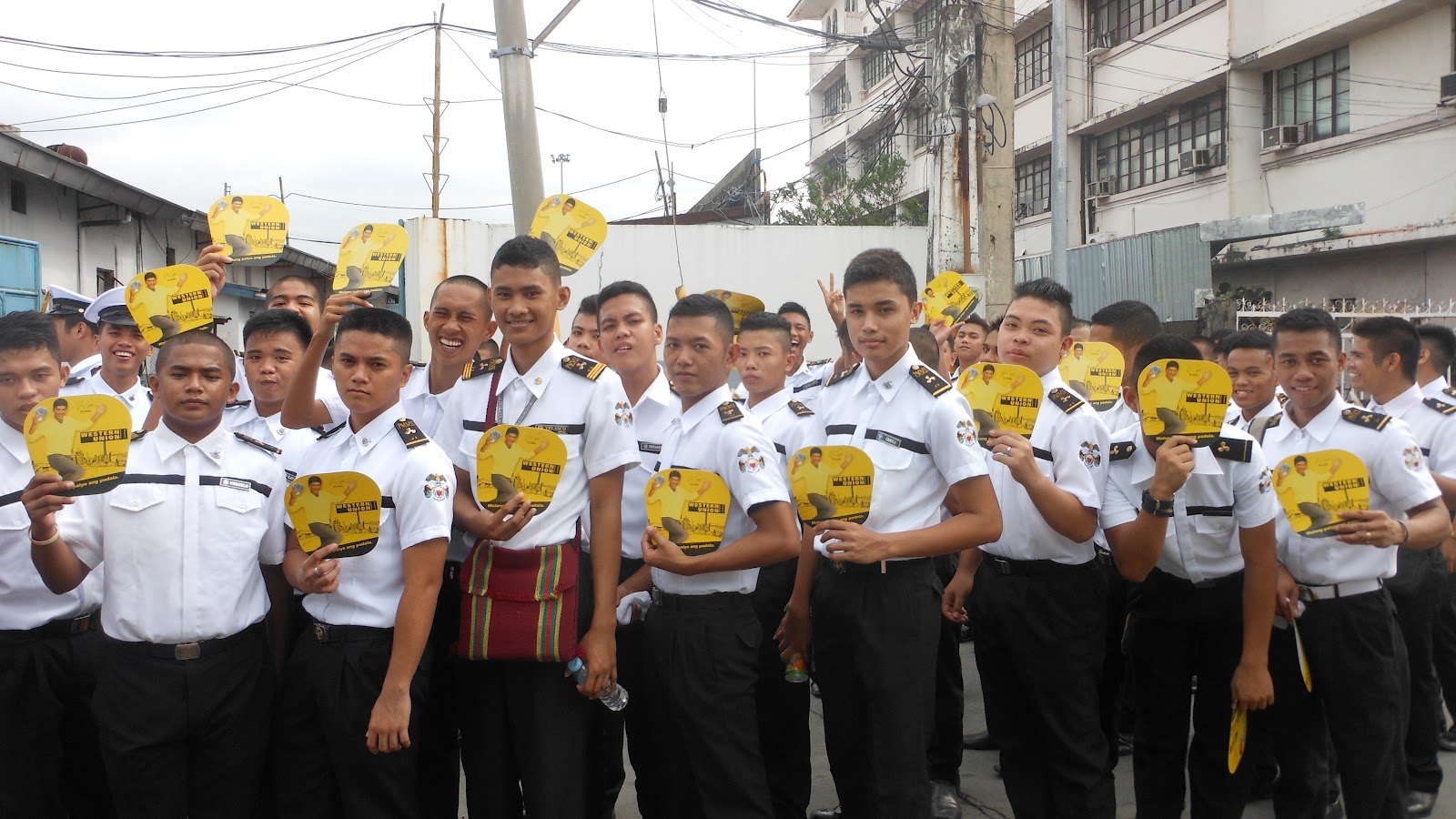
Congratulations to the Top Ten Maritime Students of the Philippines during this year's National Seafarers' Day celebration. I was one of the judges who interviewed the short-listed 34 students from the original 70 plus hopefuls nationwide. After the 10-hour interview with each student giving their best within 15 minutes each, these top ten students were chosen. Some of the questions we asked them:    a) if your boat had an accident and only two are left (you and one of the other hopefuls) will you give him the remaining salbabida? (b) how will you deal with discrimination on board? (c) due to high income, will the "expected compulsory" monetary support to family members cultivate a culture of mendicancy (d) the "utility boy" phenomenom; and (d) sell yourself to a manning agency as a promising future Filipino seafarer. The search was sponsored by Western Union.

Top Ten Maritime Students of the Philippines
Four of the Top Ten Maritime Students of the Philippines during this year's National Seafarers' Day celebration being interviewed live over our radio program Bantay OCW Kabalikat ng Marino last September 27, 2012 . It is aired every thursday. 1230:00 p.m. to 2:00pm Radio Inquirer DZIQ 990AM. Then at 8:00p.m. Friday NBN channel4


Sunday, July 22, 2012

Intoy Syokoy, Filipino seafarers, and piracy

SYNOPSIS Intoy (JM de Guzman) has had the hots for Doray (LJ Moreno)  since they were kids in Kalye Marino, Cavite City, formerly the American Naval Base in Sangley Point.  Both marginalized as the long-lasting effect of American abandonment of the said base, Intoy has become Kalye Marino’s best “tahong” caretaker-with-no-angst-about-poverty, while Doray a cheap prostitute-with-no-guilt, tending to her siblings’ needs.  Intoy strives to have his own cages of “tahong” so he can have Doray, not for just a night of quickie sex, but forever.  But what will he do to when she offers to drop by his hovel-on-stilts to quench his passion, but before it happens Nature has chosen to play a joke on his tahong cage?  Will it be goodbye to his tahong business or to his damsel-in-distress and ultimately to Kalye Marino?  From Eros S. Atalia’s 2001 Palanca Grand Prize-winning Short Story, Intoy Syokoy ng Kalye Marino is a love tale minus the obligatory romantic sentiments.   
Kenneth Salva
As a maritime  lawyer representing the Filipino seafarers, I commend the producers for tackling the issue of piracy that continue to plague the seafaring industry. In this Cinemalaya entry, Kenneth Salva portrayed the role of one of Intoy's barkada who wanted to follow the footstep of his father who is a seafarer. His dream collapsed after receiving news that his father was killed during a piracy incident while on the high seas.  


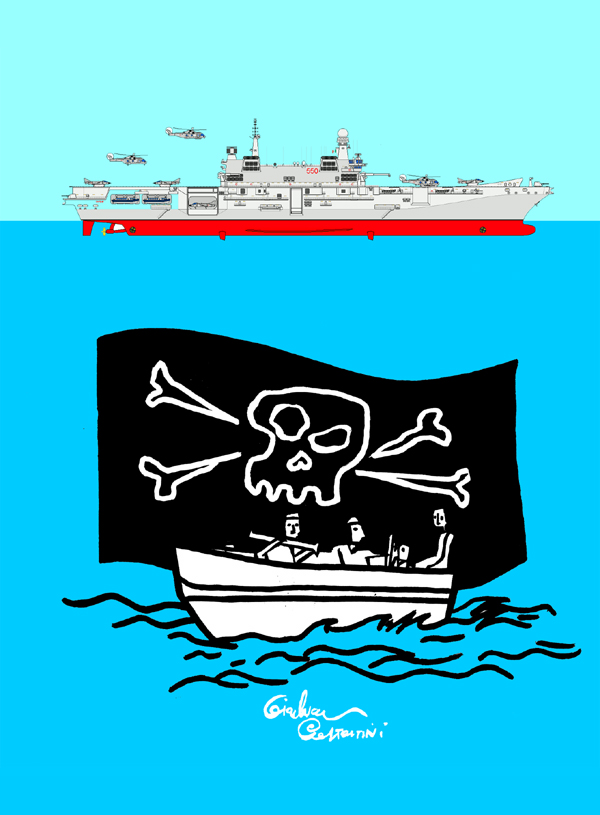
 The recent piracy incidents are  reality checks  to the risk faced by seafarers , particularly Filipino seafarers.  The Philippines, which supplies a third of the world’s seafarers’ population, is among the most adversely affected and seriously alarmed by incidences of piracy in the Somali basin and the Gulf of Aden. The hijacking of dozens of vessels, ranging from massive oil tankers to chartered supply ships carrying UN food aid for Somalia, has become a highly lucrative industry with millions of dollars paid in ransom each year.  

Seafarers are on the frontline of the piracy problem. In recent years, thousands of seafarers have been killed, injured, assaulted, taken hostage or threatened as piracy and armed robbery have increased dramatically.. All seafarers transiting the Gulf of Aden and Northern Indian Ocean, have to live with the risk of attack. When ships are attacked by pirates, crews suffer the stress of being fired upon with guns and rocket propelled grenades and those captured can be held hostage for months. Following a piracy attack those involved can be seriously affected by post traumatic stress.   As a policy, the Philippine government does not negotiate with nor pay ransom to kidnappers, but gives ship owners the free hand in negotiating for the release of abducted Filipino sailor.


     I am presently handling the case of a  Filipino sailor,  Christopher Cortez Ceprado, who was found dead last May 11, 2011 aboard MT Sea King , a Marshall Island-flagged chemical tanker, four days after it was attacked by pirates off the coast of Benin in West Africa. Heavily armed pirates on May 7, 2011  boarded chemical tanker MT Sea King while docked in Cotonou, the largest city in Benin, . Ceprado, who was among the 15 Filipino crewmembers of the ship, was later found dead on May 11. The pirates looted the vessel and even the personal effects of the crew were taken. Ceprado's family hailed from my hometown  of Matabao. Tubigon, Bohol.   


"Equality," said Aristotle, "consists in the same treatment of similar persons." Unfortunately, his family is deprived of appropriate death compensation under the government’s  “double pay” policy  for victims of piracy attacks.

            The death of a seafarer during the term of his employment makes the employer liable to the former’s heirs for death compensation benefits.  The POEA Standard Employment Contract fixes the amount at US$50,000.00 and an additional amount of US$7,000.00 for each child, not exceeding four, under twenty-one years of age.  The employer becomes liable once it is established that the seafarer  died during the effectivity of his employment contract.

   On October 7, 2008, the Philippine Overseas Employment Administration (POEA) issued Board Resolution No. 4, which declared as “high risk” zone certain coordinates within the Gulf of Aden. The resolution also mandates that Filipino seafarers will receive double the amount of their basic wage, overtime pay, and leave pay while sailing within the declared high-risk zone. On any death, injury or illness while sailing within those areas, the seafarers are also entitled to a double amount of compensation and benefits. The problem with  this policy is that it only covers Somalia and the Gulf of Aden and a certain expanded area.The fact remains that piracy is not limited to Somalia and the Gulf of Aden. The International Maritime Bureau (IMB) warned  seafarers to be extra cautious and to take necessary precautionary measures when transiting the following piracy prone areas:

a.         SOUTH EAST ASIA AND INDIAN SUB CONTINENT  Bangladesh, India, Indonesia, Malacca Straits, Malaysia,  Singapore Straits, South China Sea, Vietnam:
b.        AFRICA AND RED SEA: Nigeria,  Benin: Cotonou, Conakry (Guinea), Douala Outer Anchorage (Cameroon), Gulf of Aden/Red Sea.
c.         SOUTH AND CENTRAL AMERICA AND THE CARIBBEAN WATERS: Brazil, Peru, Venezuela, Haiti: Port Au Prince.
d.         REST OF THE WORLD: Arabian Sea / Off Oman, Indian Ocean/Off Seychelles / Off Madagascar / Off West Maldives / Off Mozambique, Iraq.

Although  Ceprado’s death occurred in Cotonou, Benin which is not within the “high risk” areas declared by the POEA Board Resolution No. 4, his family  is  seeking death benefits under the POEA “double pay” policy since he died under the same conditions and circumstances describing piracy. Depriving them of such “double pay” compensation is tantamount to a violation of the “equal protection clause” of the Philippine Constitution.

The Supreme Court has stressed in several rulings that the principle of equal protection is not a barren concept that may be casually swept aside. While it does not demand absolute equality, it requires that all persons similarly situated be treated alike, both as to privileges conferred and liabilities enforced. Verily, equal protection and security shall be accorded every person under identical or analogous circumstances in view of Section 1, Article III (Bill of Rights) of the 1987 Constitution which reads:   

“Section 1. No person shall be deprived of life, liberty, or property without due process of law, nor shall any person be denied the equal protection of the laws.”

 Per Philippine Overseas Employment Administration (POEA) data, there were 330,424 Filipino seafarers deployed abroad in 2009 comprising almost 30 percent of the global maritime labor force. Although the number of deployed Filipino seafarers has decreased from 2006 (274,497), 2007 (266,553) to 2008 (261,614), the dollar remittances have been constantly  increasing from US$1.9B in 2006, US$2.2B in 2007 , US$3B in 2008, US$3.4B in 2009 to US$3.8B in 2010. 

Since the Philippines supplies a third of the world’s seafarers’ population, it will remain as among the most adversely affected and seriously alarmed by incidences of piracy in the high seas. Unfortunately, the present compensation scheme will remain violative of the “equal protection” clause of the Philippine Constitution as long as the “double pay” policy will cover a very limited group of seafarer victims of piracy.

Friday, June 22, 2012

When will Philippines ratify Maritime Labor Convention 2006?

Even if the Philippines boasts itself as a major supplier of global maritime labor,   President Benigno Aquino II is "noynoying" in ratifying  the  so called international magna carta for seafarers rights which will soon  take into effect. With one more country to go, it seemed that President Aquino is  espousing a lukewarm attitude in being one of the of the first thirty ratifying countries required for the Maritime Labour Convention of 2006 (MLC2006) to take effect.


With the deposit to the ILO of the ratification documents of the MLC 2006 by Cyprus    last July 20, 2012 , 29 member States of the International Labour Organization (ILO) have now ratified this important Convention, which sets out minimum standards and fair working conditions for seafarers worldwide. While the first requirement for entry into force of the Convention – coverage of 33 per cent of the world gross tonnage – has already been attained, the ratification iby Cyprus s an important step towards achieving the second requirement: 30 ratifying countries. It is expected that the remaining 1 ratificiaion will be obtained before the end of 2012, indicating that the MLC, 2006 will enter into force in 2012.


The convention was already ratified by 29 countries/ states, to wit: Liberia (June 7,2006), Marshall Islands (September 25, 2007 ), Bahamas (February 11,2008), Panama (February 6, 2009), Norway (February 10, 2009) , Bosnia and Herzegovina (January 18, 2010) , Spain (February 4, 2010), Croatia (February 12, 2010) , Bulgaria (April 12, 2010) , Canada (June 15, 2010),Saint Vincent and the Grenadines (November 9, 2010) , Switzerland (February 2, 2011), Gabon (May 12, 2011) Benin (June 13, 2011), and Singapore ( June 15, 2011). Denmark (June 23, 2011) Latvia (August 12, 2011)_ Antigua and Barbuda (August 11, 2011) , the Government of Luxembourg (19 September 2011), Kiribati (24 October 2011) Netherlands (December 2011) Australia (14 December 2011), Tuvalu (February 16, 2012) Saint Kiss and Nevis (February 21, 2012), Togo (March 14, 2012) Poland (May 3, 2012), Palau (May 29, 2012), Sweden (June 12, 2012) and Cyprus (July 20, 2012)


Ratification is the formal act by which a state confirms and accepts the provisions of the convention concluded by its representatives. The purpose of ratification is to enable the contracting states to examine the convention more closely and to give them an opportunity to refuse to be bound by it should they find it inimical to their interests. It is for this reason that most treaties/conventions are made subject to the scrutiny and consent of a department of the government other than that which negotiated them. Ratification is generally held to be an executive act, undertaken by the head of the state or of the government, as the case may be, through which the formal acceptance of the treaty is proclaimed.

In the Philippine jurisdiction, the power to ratify is vested in the President and not, as commonly believed, in the legislature. The role of the Senate is limited only to giving or withholding its consent, or concurrence, to the ratification. The MLC 2006 will become valid and effective if concurred in by two-thirds of all the members of the Senate (Section 21, Article VII, 1987 Constitution.) This means it forms part of Philippine law by virtue of transformation. By an act of the legislature, the convention rules may be transformed into Philippine law, to be applied or enforced as part of Philippine law.


The MLC 2006 is an important new Convention that was adopted by the International Labour Conference of the ILO at a maritime session in February 2006 in Geneva, Switzerland. It sets out seafarers’ rights to decent conditions of work and helps to create conditions of fair competition for shipowners. It is intended to be globally applicable, easily understandable, readily updatable and uniformly enforced. The MLC , 2006 has been designed to become a global legal instrument that, once it enters into force, will be the “fourth pillar” of the international regulatory regime for quality shipping, complementing the key Conventions of the International Maritime Organization (IMO) such as the International Convention for the Safety of Life at Sea, 1974, as amended (SOLAS), the International Convention on Standards of Training, Certification and Watchkeeping, 1978, as amended (STCW) and the International Convention for the Prevention of Pollution from Ships, 73/78 (MARPOL). Between 1920 and 1996, a total of 39 Conventions, 29 Recommendations and one Protocol concerning seafarers have been adopted by the ILO.


The MLC contains a comprehensive set of global standards, based on those that are already found in 68 maritime labor instruments. It modernizes the global standards to: (a) set minimum requirements for seafarers to work on a ship; (b) address conditions of employment, accommodation, recreational facilities, food and catering, health protection, medical care, welfare and social security protection; (c) promote compliance by operators and owners of ships by giving governments sufficient flexibility to implement its requirements in a manner best adapted to their individual laws and practices; and (d) strengthen enforcement mechanisms at all levels, including provisions for complaint procedures available to seafarers, shipowners’ supervision of conditions on their ships, the flag States’ jurisdiction and control over their ships, and port State inspections of foreign ships.


The new Convention will likely achieve the aim of near universal ratification because the Convention was adopted by a record vote of 314 in favour and none against (two countries abstained for reasons unrelated to the substance of the Convention), after nearly two weeks of detailed review by over 1,000 participants drawn from 106 countries.


Countries that ratify the Convention will require ship owners to put the standards in place before allowing seafarers aboard. And ratifying countries will have the right to inspect vessels for compliance before port calls are allowed. The Convention gives these countries the right to deny ships that are not compliant from sailing onwards. This applies to ships regardless whether the countries they are registered in have ratified the Convention or not.


The Philippines will definitely be one of the major beneficiaries of this convention. The Philippines is considered as the major supplier of maritime labor globally. Per Philippine Overseas Employment Administration (POEA) data, there were 330,424 Filipino seafarers deployed abroad in 2009 comprising almost 30 percent of the global maritime labor force. Although the number of deployed Filipino seafarers has decreased from 2006 (274,497), 2007 (266,553) to 2008 (261,614), the dollar remittances have been constantly increasing from US$1.9B in 2006, US$2.2B in 2007 , US$3B in 2008, US$3.4B in 2009 to US$3.8B in 2010. On the other hand, the Philippines as a flag State has a registered fleet comprising around 1.4% of total world tonnage.
Given the vast Philippine coast line (twice the size of the United States and nearly three times more than China), Filipinos have natural maritime instincts that place them at an advantage over other nationalities. Foreign shipowners are known to prefer Filipino seafarers for equally important qualities: dedication and discipline, industry, flexibility, loyalty, English language fluency, adaptability, positive work attitude, law-abiding, and problem-solving capability.


The Philippines can benefit from ratifying the Convention as a labour supplying state, flag or port state. The maritime labour convention is a good reference point for the Philippine’s formulation of laws and policies responsive to the conditions and contexts of seafarers. Ratification can serve as basis for technical assistance.


When the Philippines does ratify the Convention, for example, manning agencies are mandated not to deploy seafarers aboard ships that don’t follow the new Convention. On the other hand, if the Philippines does not ratify, ratifying countries will not allow Filipinos aboard their ships – unless the Philippine government certifies that manning companies are complying with the new standards relating to wages, social security and so on. The disadvantage non-ratification by the Philippines is that shipowners will have to bear the responsibility for checking the Convention’s requirements on the recruitment and placement of the seafarers.


As the foremost seafarer-supplying country and a flag State with a registered fleet comprising around 1.4% of total world tonnage, it behooves upon Philippine social partners and stakeholders to determine the passage most beneficial to our national interests. It is now incumbent upon the Philippine government to ratify MLC2006 in order that it will be one of the thirty ratifying countries required for the convention to take effect