Monday, January 6, 2020

Cheering UP Fight amidst the odds


The UAAP  games galvanized an  extraordinary sense of solidarity for the denizens of    the University of the Philippines , often described as the microcosm of a highly diverse nation.

An academic community  all too easily fractured by politics and personal interest, the cheer “UP FIGHT!” reverberated  during the UAAP Season 82 as the  UP Fighting Maroons Men’s basketball team fought  UP style  – “may giting at tapang.”  

The Fighting Maroons have been branded as “Cramming Maroons" by fans due to their nail-biting, cardiac victories the entire season,  three out of the nine  wins have been one-point advantages. 

Cramming is life for the UP community — even basketball games are no exception in that habit.

UP’s  bid for the championship trophy unfortunately ended when it  lost to UST  during the Final Four stepladder  game last November 13  at the Mall of Asia Arena with the score of 68-65.

However, the Maroons had    their best record yet with a nine-four (9-4)  win-loss  this season, with the support of  groups such as  Nowhere To Go But UP.

One should not take for granted the improving win-loss scoreboard under Coach Bo Perasol: 5-9 in Season 79, 6-8 in Season 80, , and 8- 6 in season 81 wherein the UP Fighting Maroons entered the Finals but sadly lost to defending champion Ateneo.

Out of the 1,115 points earned by the team this season, 236 points  were from Kobe Paras, 235 points from  Bright Akuete,  151 points from  Javi Gomez de Liano, 134 points from Ricci Rivero and  132  points Jun Manzo.

In front of thousands of UP fanatics, the Six J’s — seniors Jun Manzo, Janjan Jaboneta, Jerson Prado, Jose Piero Longa, Jaydee Tungcab, and Jaybie Mantilla — sang UP Naming Mahal for the last time last November 13.  

“They should continue to have that winning mindset. Even though we weren’t able to get a finals spot, I hope they continue pushing for the Final Four. I’m thanking UP that they accepted my transfer. We did everything we could. I don’t regret anything”, Manzo said in an interview.  With 132  points , 56  rebounds, and 64 assists, his number of assists is the highest among the team members.  

Bright Akhuetie, the team’s 6-foot-8  center, viewed this season with a positive note:  "Winners don't stop when they lose, they learn and get better."

At the start of the season, Kobe was confronted  with  very high expectations, whether he liked it or not, being  the son of Philippine basketball legend Benjie Paras.  Kobe did not let down the UP community with his  performance this season with 236 points , 72 rebounds, and 25 assists.

“I’ve learned to love myself and be more appreciative of what I have instead of wanting more things,” Kobe  said in an interview after UP’s loss over UST. “I think that’s a lesson for a lot of people in this world that you have to be grateful for what you have. You can’t be fishing for stuff you don’t have. You’ll never be complete.” 

A campus  anecdote  was that the varsity team was once known  as  the UP Parrots but  was replaced with a new moniker that  revived the old (circa 1920s)  name Maroons along with the  adjective "fighting"  to describe the sportsmanship attitude  that the UP  varsity teams  must possess   during the games.

 In 1986 when   EDSA Revolution happened, UP won over UE Red Warriors under the guidance of legendary coach Joe Lipa.

A year later, I entered UP Diliman  as a freshman in 1987 but I still felt the championship  euphoria as I often see  Benjie Paras around the campus.

 As chief photographer of Philippine Collegian from 1989 to 1991, I remember my coverages of the games  with very few, if none, UP denizens inside the venue.

Almost thirty years later, securing tickets became a challenging feat in every game due to the increasing number of enthusiastic fans eager to shout “UP Fight” as the maroons battle it out to earn the spot for the final games. 

Each  game became mini-reunions of  Titos and Titas with endless photo-ops and reminiscing of college days memories  over coffee, merienda or  dinner. 

With UP’s loss to UST, several criticisms lingered  on how coach Bo handled the team.

 One of the post I have seen says:  “ Hope people stop bashing the coach who stood by and helped UPMBT get to where it is right now. He's no longer yours but ours and we can only look with gratitude for what he's done for the team. As far as I know, there are things more important than winning - loyalty, gratitude and brotherhood are among them.”.

UP lost  but we will continue to shout UP Fight!

***
 Kule is the monicker of Philippine Collegian, the official student publication of UP Diliman. Atty. Dennis R. Gorecho heads the seafarers’ division of the Sapalo Velez Bundang Bulilan law offices. For comments, email info@sapalovelez.com, or call 09175025808 or 09088665786).

WWII sexual slavery and violence victims seek justice before the United Nations


Justice has not been given to World War II women victims of   sexual slavery and violence as their fight for unequivocal public apology, accurate historical inclusion, and just compensation continues up to this day.

 Last November 25, the group Malaya Lolas sued the Philippine government filed the complaint in the form of a communication submitted to the United Nations Committee on the Elimination of Discrimination against Women. 

Part of Malaya Lolas’ 38-page communication states that .“the failure of the Philippine government  to espouse the claims of the  victims in respect to reparations for having been subject to sexual slavery, rape and other forms of sexual violence as well as torture perpetuates a culture of impunity for discrimination against women within the meaning of Article 1,”  

Their counsel Romel Bagares of CenterLaw said the victims have resorted to filing the complaint before the UN after exhausting all legal efforts in Philippine courts to seek reparation.

The lolas want the international body to "urge" the Philippines to "provide full and effective redress and reparation, including compensation, satisfaction, official apologies and rehabilitative services."

The complaint was filed two days after the anniversary of the so called Mapaniqui Siege when the Imperial Japanese Army on   November  23, 1944 attacked Mapaniqui in Candaba, Pampanga a suspected bailiwick of Hukbo ng Bayan Laban sa Hapon (HukBaLaHap).

Communities were bombed, houses were looted and burned.

Women were forced to watch under the sun   the men and boys being  publicly tortured, mutilated, and slaughtered by the Japanese army. Their sexual organs were severed and forced  into the mouths of the victims. When the massacre was over, the corpses were thrown into a large pit and set ablaze.

The women ranging from 13 to early 20s were then  ordered to walk  to the Bahay na Pula in San Ildefonso, Bulacan which became  “comfort stations.”  where they  became victims of military sexual violence and slavery

As a result of the actions of their Japanese tormentors, the victims  have spent their lives in misery, having endured physical injuries, pain and disability, and mental and emotional suffering.

The women broke their silence in August 1996, four years after Maria Rosa Luna Henson made public her ordeal as a “comfort woman.”

The Malaya Lolas was then  established which  initially had 90 members. Sadly, more than two decades  later, their present number dwindled to 29  due to deaths of its members. 

The Malaya Lolas claim that since 1998, they have approached the Philippine government  requesting assistance in filing a claim against the Japanese officials and military officers who ordered the establishment of the “comfort women” stations in the Philippines.

However, government officials  declined to assist the Malaya Lolas, and took the position that the individual claims of the comfort women for compensation had already been fully satisfied by Japan’s compliance with the Peace Treaty between the Philippines and Japan.

In 2014, the Supreme Court  finally denied the petition filed by Malaya Lola to declare the Philippine government guilty of grave abuse of discretion for refusing to espouse their claims for war crimes and crimes against humanity.

The Court ruled that while it commiserates with the sufferings of the women of Mapanique, this, allegedly, is one instance where there is a violation of right but bereft of a legal remedy. The Court also said that while rape is prohibited, there is no non-derogable obligation to investigate, prosecute and punish those who committed mass rape as a war crime. 

Two years ago, a 2-meter-high “Lola” statue of  an unnamed woman wearing a traditional Filipino dress, blindfolded, with hands clutched to her chest,  was installed on December 7, 2017 along Roxas Boulevard.   
The LOLA statue represents Filipino women’s dignity and stands as “a reminder that wars of aggression must always be opposed, and that sexual slavery and violence should never happen again to any woman, anywhere at any time.”

Sadly, four months after its installation in December 2017,  the statue was dismantled under cover of darkness on April 27, 2018 by the DPWH,  allegedly for a drainage improvement project, but seen as  submission to protests from Japan.

Issues of historical revisionism and the government’s submission to Japanese policy were raised by concerned groups led by the Flowers-for-Lolas as they condemned the removal of the statue. President Duterte earlier remarked the state would not want to “antagonize” other countries.

The statue was later declared missing last August due to the failure of  its artist,   Jonas Roces to deliver the statue back to the Tulay Foundation  for the  supposed  reinstallation at the Baclaran Redemptorist Church.

It has been more than 70 years   since the war ended on August 15, 1945, and yet the Japanese government refuses to recognize its official accountability to the victims of sex slavery.  

 
***
 Kule is the monicker of Philippine Collegian, the official student publication of UP Diliman. Atty. Dennis R. Gorecho heads the seafarers’ division of the Sapalo Velez Bundang Bulilan law offices. For comments, email info@sapalovelez.com, or call 09175025808 or 09088665786).

Friday, July 5, 2019

Sunflowers, Sablay and the ultimate rites of passage in UP


Sunflowers and sablay – two icons that flooded social media accounts  of graduates of  University of the Philippines (UP) in Diliman.

These icons  have become the symbol of the ultimate rites of passage in the university, as graduates hurdled every academic requirement through sleepless and restless days and nights.

It is said that the blossoming of sunflowers were already a tradition since the 1970s. However, I do not have any recollection of sunflowers during my two graduation ceremonies, B.S. Economics in 1991 and Bachelor of Laws in 1998.

I also did not wear a sablay as the university amphitheater was just a sea of traditional black togas.

Sablay, translated from tagumpay, or “triumph”, is just a fitting sash for the students that have completed their studies, which became the official academic costume of UP officially adopted in 2000.

The sablay gets its inspiration from the Muslim malong, a loose garment made from a seamless bolt of cloth. It incorporates various traditional elements found in other Philippine cultures.  Running through the sablay are geometric motifs of indigenous Philippine tribes.  

The university colors of maroon and green frame the initials of the University rendered in yellow gold alibata characters, the ancient Philippine alphabet,  

The sablay is worn initially over the right shoulder.  After the President has conferred the degree, it is moved from the right to the left shoulder without being taken off.

Giving   graduation a new and colorful twist in tradition,  the bright yellow sunflowers lead the way for graduates towards the iconic Oblation statue and behind it the Amphitheater where the commencement exercise is held.

The sunflower (Helianthus annuus L.) is an annual, erect, broadleaf plant with a strong taproot and prolific lateral spread of surface roots.

Sunflowers bloom around the same time the students graduate — formerly, around April. When UP shifted their academic calendar, the people in charge of the sunflowers found a way for these flowers to bloom even during the rainy season around June.

As a parting gift for graduating students, sunflowers become reminders of the various cycles of life and death. As one blossoms inside the campus, there will come a time that one will have to leave.

The growth of Sunflowers is dependent on full sun , just as every Isko cherish  challenges  inside the university as necessary for their personal development.

Sunflowers also always follow the direction of the sunlight, the same  light that calls graduates  to serve the country. 

The tradition for lighting rallies was also expected – a long red banner unfurled with the message “Atin Ang Pinas” during last Sunday’s university graduation.

Towards the end of the program, some graduates also raised placards with messages on various issues, including China, press freedom, political prisoners and LGBT rights.

Speaking at the UP College of Social Sciences and Philosophy, Supreme Court Senior Associate Justice Antonio Carpio earlier said Filipinos have the constitutional and civic duty to protect the nation’s territorial integrity in the West Philippine Sea He added that the Constitution mandates that the use and enjoyment of the country’s marine wealth in its exclusive economic zone shall be reserved exclusively for the Filipino people. Carpio pointed out that “only a fool will go to war with China. It is clear that the specter of war is being raised only to intimidate the Filipino people into submitting to China’s encroachment of our EEZ.”

Former Ombudsman Conchita Carpio Morales, on the other hand, urged the graduates of UP School of Economics to help defend Philippine sovereignty as they continue their quest for excellence in their field and contribute to the betterment of the Filipino people.

A total number of 55 Summa Cum Laude graduates led this year’s Diliman graduates, three of which came from my college School of Economics. This is the highest recorded number of Summa graduates not only in the history of the Diliman campus but also of the entire UP System.

To the new UP graduates, savor the brightness of the sunflowers and be true to the lyrics “Humayo’t itanghal, giting at tapang. Mabuhay ang pag-asa ng bayan!”
 ***
 Atty. Dennis R. Gorecho heads the seafarers’ division of the Sapalo Velez Bundang Bulilan law offices. For comments, email info@sapalovelez.com, or call 09175025808 or 09088665786).

Thursday, July 4, 2019

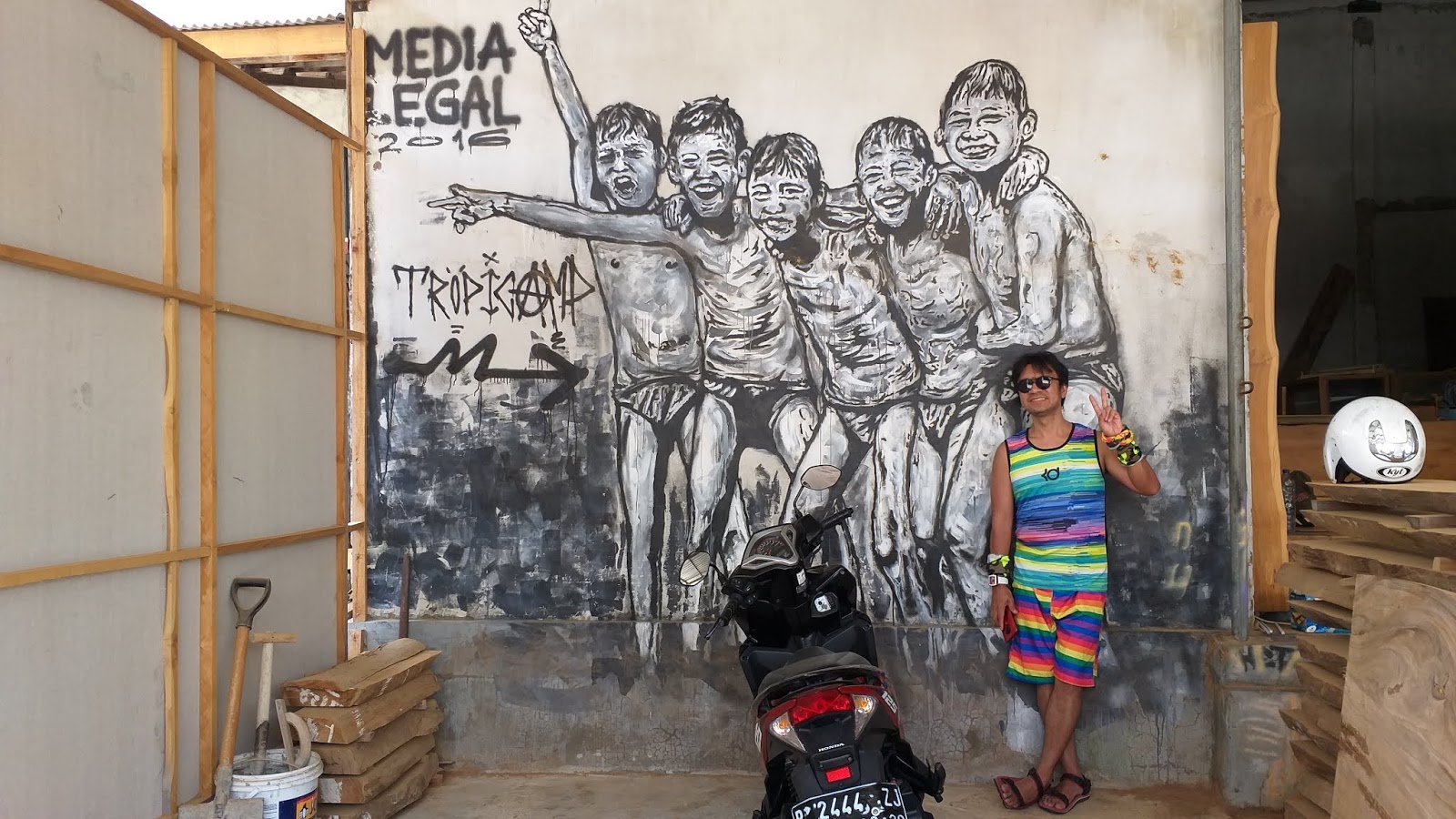
street art Bali, Indonesia


Street art is a form of artwork that is displayed in a community on its surrounding buildings, streets, trains, and other publicly viewed surfaces. Many instances come in the form of guerrilla art, which is composed to make a public statement about the society that the artist lives within.

My travels will not be complete without visiting the street art.

Here are my photos in Bali, Indonesia last April 2019. 

LEGIAN:


 CANGGU:


 SEMINYAK


Tuesday, March 5, 2019

#NeverForget Nana Rosa


#NeverForget. The hashtag usually attached to campaigns against historical revisionism. 

“There was no rest, they have sex with me every minute.  That’s why we’re very tired.  They would allow you to rest only when all of them had already finished.  Due to my tender age, it was a painful experience for me.  Sometimes in the morning and sometimes in the evening – not only 20 times,” Nana Rosa Henson said in her book.  

Nana Rosa  and other Asian sex slaves were euphemistically called “comfort women” (jugun ianfu  in Nihonggo) by their captors.  Nana Rosa was the first such Filipina to tell the world about this inhuman practice of the Japanese during the war.

To many, the memories of World War II  are dim, made dimmer by the passing on of the grandmothers and grandfathers who lived through the horrors of that war.

Written by Rody Vera under the direction of José Estrella, Nana Rosa recounts on stage  the life of Maria Rosa Henson, the first Filipino comfort woman to come forward with her story in public — starting from her early life, to her capture and eventually her becoming a comfort woman, liberation, and finally deciding to tell her story nearly fifty years later.
On the occasion of the 80th year anniversary of the start of World War II, this UP Playwright’s Theatre work  underscores that some traumas are so severe that, though the mind tries to forget, the feeling always remains. Memories become hazy and details are forgotten, but sometimes out of nowhere, like a dam breaking, they come flooding.
The play aptly showed her life: born on December 5, 1927, Nana Rosa was barely 15 years old in 1942 when she was raped twice by a Japanese officer in what is now the Fort Bonifacio.  In 1943,  she was captured by Japanese soldiers and was taken to a garrison in Magalang, Pampanga, where she became a sex slave for Japanese troops for nine months until she was freed by the Hukbalahap in 1944.
Lola Rosa felt some hesitation when she heard an appeal by Nelia Sancho, a member the Task Force for Filipina Military Sexual Slavery by Japan, for Filipina comfort women to stand up for their rights and demand justice as well as restitution for Japan’s war crimes against Asian women during the war.  Then, on September 18, 1992, she decided to come out with her story, and to tell everyone what happened to her, with the hope that such an ordeal will never happen again to any woman.

The play has a personal link to me since I had the privilege to see  and talk to  Nana Rosa in person when I was a reporter then assigned to cover the Lila Filipina, the organization of former Filipina comfort women.
 I last saw her during Lila’s  1996 Christmas party. Despite her failing health, one could still sense her courage, the same courage she displayed when she went public with her story: she was one of the thousands of women forced into sexual slavery by the Japanese Imperial Army during World War II. 
Wearing a Filipina dress, she danced and sang with other lolas, unmindful of her deteriorating health due to  a stroke she suffered  after her 50-year-old daughter Rosalinda died.  On August 18,1997 Lola Rosa Henson succumbed to a heart attack and died without receiving the justice she had long fought for.  Her death came three days after the 52nd anniversary of the end of World War II.
I lost track of the number of  Filipina comfort women who followed Lola Rosa’s example, just a minute portion of the 80,000 to 200,000 Asian comfort women who suffered systematic rape, torture, imprisonment and death at the hands of the Japanese Army during World War II.

Calling her “maestra” or great mentor, the rest of the surviving comfort women vowed to continue what Lola Rosa started. 
The presence of one of the surviving comfort women, Lola Narcisa Claveria, gave more  substance  to last Sunday’s  post-show discussions with her courage and composure in spite of the play's deep impact on her. “Ang giyera, walang pinipili. Ayaw naming maranasan ng bagong kabataan ang dinanas naming kalupitan.”. She is living proof that the quest for justice remains alive today,
It has been more than 70 years   since the war ended on August 15, 1945, and yet the Japanese government refuses to recognize its official accountability to the victims of sex slavery.  Justice has not been given to women such as Rosa Henson. Their fight for unequivocal public apology, accurate historical inclusion, and just compensation continues up to this day. 
The show will run from 20 February to 17 March 2019 at the Wilfrido Ma. Guerrero Theater, 2nd floor, Palma Hall, UP Diliman, Quezon City.


Wednesday, June 13, 2018

Murals of Mission District

Kodakan with the #graffitis during my travels ( May 2018, ) 

The Mission District in San Francisco, California   is a virtual outdoor art gallery full of vibrant murals. Throughout the neighborhood, hundreds of walls and fences are adorned with colorful works of art featuring themes ranging from cultural heritage to social political statements. You will find painted pieces, mosaics and a few that combine both styles. You can also find a handful with some 3D elements They come in all different shapes, sizes and colors, but each one is tells a story and is a unique work of art.Best viewed on foot, take a stroll over to these locations for an up-close experience

Graffiti makes the streets colourful, brings life into the greyness of everyday life and sterile architecture, showing signs of life of the people living behind the facades. Graffiti may express underlying social and political messages and a whole genre of artistic expression.


Tuesday, February 13, 2018

2018: year of the Earth Dog


Kung Hei Fat Choi!

The foundation of the Chinese Zodiac, also called Chinese Animal Astrology, was from the 12 "Earthly Branches" represented by the 12 animal symbols (The Rat, Ox, Tiger, Rabbit, Dragon, Snake, Horse, Sheep, Monkey, Rooster, Dog, Boar), the five elements (metal, water, wood, fire, and earth) and the Yin-Yang theory.   


There are many myths and legends about how the 12 animals representing the 12 years in a lunar cycle came into being.  One of the most popular is that the Lord Buddha called all the animals to come to him before departing this earth.  Only 12 animals came, and as a reward he named a lunar year after each according to the order in which it arrived.  The Rat was the first to get there, crossing the final river on the back of the Ox and jumping down in front.  Following them were the Tiger, Rabbit (Hare), Dragon, Snake, Horse, Sheep (Goat, Ram), Monkey, Rooster, Dog, and Boar 


I was born under the Year of the Dog (1970)  – 狗 / 犬 (戌) (Yang, 3rd Trine, Fixed Element Metal): Years of the Dog include 1934, 1946, 1958, 1970, 1982, 1994, 2006, 2018, and 2030... The Dog occupies the eleventh position in the Chinese zodiac, after the Rooster, and before the Pig. Here is how i was described: Honest, intelligent, straightforward, loyal, sense of justice and fair play, attractive, amicable, unpretentious, sociable, open-minded, idealistic, moralistic, practical, affectionate, sensitive, easy going. Can be cynical, lazy, cold, judgmental, pessimistic, worrier, stubborn, quarrelsome.

To be more specific, i am a metal dog  (6 February 1970 – 26 January 1971). In Chinese Taoist Metal attributes are considered to be firmness, rigidity, persistence, strength and determination. The metal person is controlling, ambitious, forceful and set in their ways as metal is very strong; and they are self-reliant and prefer to handle their problems alone. The metal person is also materialistic, business oriented and good at organization and stability. However the metal person can also appreciate luxury and enjoy the good things in life. Just as metal can conduct electricity, the Metal person has strong impulses and generative powers and can bring about changes and transformations for those who come into contact with them. 


Dog YearStartEnd
2018February 16, 2018February 4, 2019
2006January 29, 2006February 17, 2007
1994February 10, 1994January 30, 1995
1982January 25, 1982February 12, 1983
1970February 6, 1970January 26, 1971
1958February 18, 1958February 7, 1959
1946February 2, 1946January 21, 1947
1934February 14, 1934February 3, 1935
Famous earth Dogs include Madonna and Michael Jackson.


Sadly speaking,   I guess the chinese have forgotten to include Frogs as part of the Chinese Zodiac .   Ironically, the Three legged Money Frog, also known as Chan Chu which means frog or toad, is an ancient and popular Chinese symbol for prosperity. It is  said to be the bearer of good fortune, which is why you always see them bringing two strings of coins tied behind their back and holding a lucky Ching Dynasty gold coin in their mouth. According to Feng Shui lore, Money Frogs are believed to drive away evil, protect wealth, and increase income.In ancient China, these mythical creatures are said to appear every full moon near homes that will receive good news of increased wealth or monetary gain. Feng Shui Masters believe that Money Frogs go out in the afternoon to collect money and return at night with lots of money sticking on their feet